
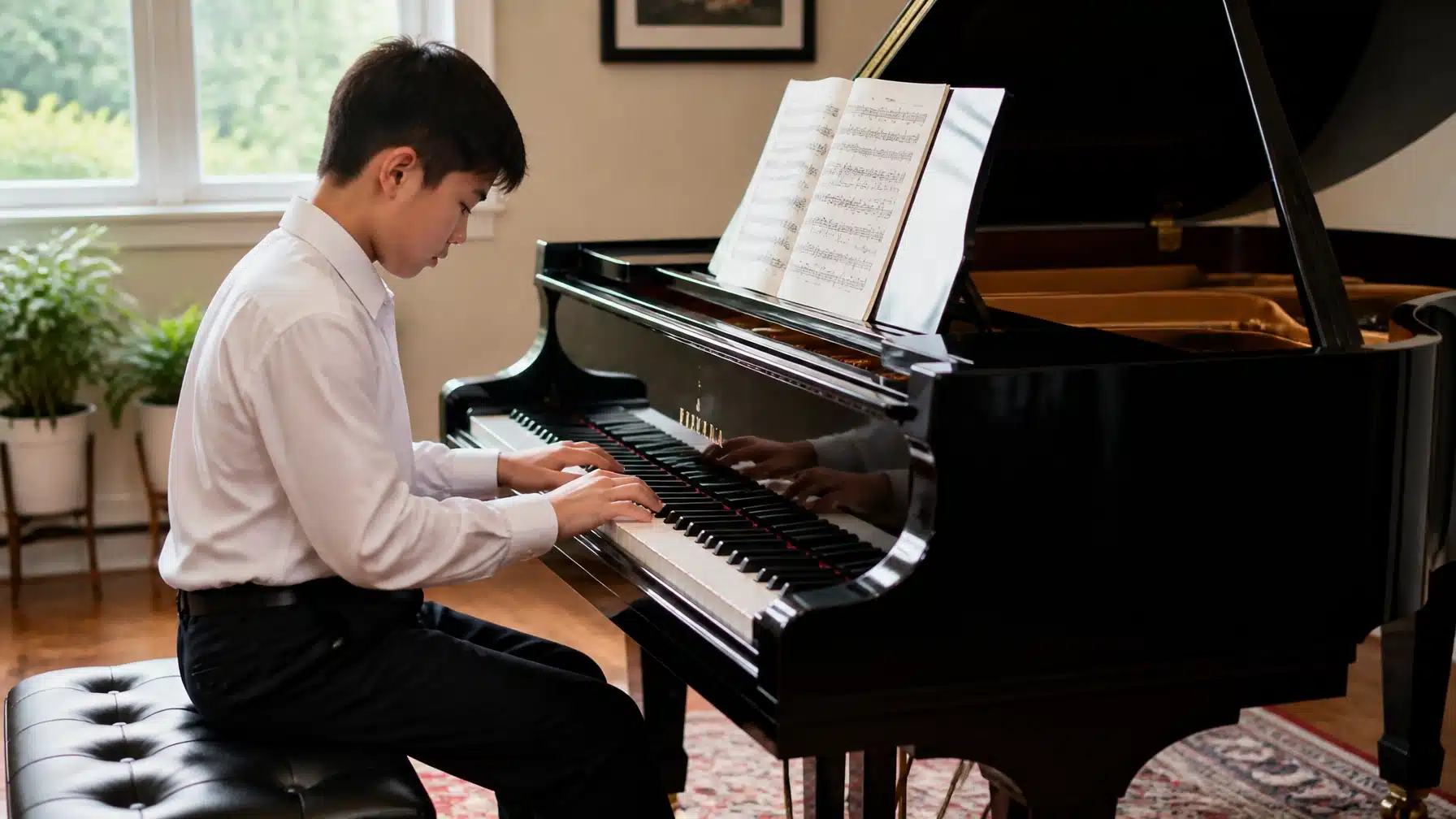
Do you remember the first time you sat down at the piano? The keys felt vast, the possibilities endless, and perhaps, a little intimidating. Now, months or even years of sustained effort have led you to this moment: the week before the recital.
For many students: and their parents: this final stretch can feel like a high-stakes countdown. The heart beats a little faster during practice, and the fear of a "blank" moment on stage starts to creep in. But here is a perspective shift: a recital is not merely a "show." It is a fundamental tool for cognitive development and character building. Just as a final exam in Math or History validates a semester of study, the recital is the ultimate exercise in discipline and confidence.
At KeyNotes Piano Studio, we view this week not as a period of stress, but as the final "polishing" phase of a beautiful journey. Here is your day-by-day guide to navigating the final seven days with poise and professional authority.
The Philosophy of the Final Week: Polish, Don’t Build
The most common mistake students make is trying to "learn" new notes or significantly increase speed in the final seven days. Scientifically speaking, your cerebral cortex and motor pathways require stability, not novelty, during this window. If you are still struggling with the notes, you are not yet ready to perform.
This week is about consistency and stamina.
Days 7 to 5: The "Polishing" Phase
During these days, your focus should shift away from heavy drilling and toward refinement.
- Spot Practice: Identify the two or three "danger zones" in your piece: the transitions or complex chords where you often hesitate. Practice these in isolation, repeating them 5–10 times at a slow tempo until they feel automatic.
- Slow-Motion Run-Throughs: Play your entire piece at 50% of the target speed. This forces your brain to stay engaged with every note, preventing the "autopilot" errors that often occur when nerves kick in.
- The Power of Starting Spots: Don't just start from the beginning. Practice starting from the middle of a phrase or the beginning of the second page. This builds "mental anchors" that can save you if you lose your place during the performance.

Why Music Performance Outranks "Core" Subjects
We often hear that Math and History are the "essential" subjects, while music is an "extra." Research suggests the opposite. Musical performance is one of the most cognitively demanding activities a human can perform. It requires the simultaneous integration of visual, auditory, and motor signals.
When you prepare for a recital, you are developing improved hand-eye coordination and a level of executive function that few other subjects can offer. This isn't just a hobby; it is a rigorous academic and neurological pursuit. Treating it with that level of respect helps students realize the intrinsic value of their hard work.
Days 4 to 3: The "Simulation" Phase
Now is the time to bridge the gap between your living room and the stage. The "performance wall" is real, but it can be dismantled with exposure.
- The Mock Recital: Perform your piece for your family, your neighbors, or even a row of stuffed animals. The presence of an audience: even a friendly one: triggers a mild "fight or flight" response. Practicing in this state is the only way to build resilience.
- The Attire Check: Wear your recital clothes. This sounds trivial, but a tight sleeve or a slippery pair of shoes can be a major distraction. Ensure your "performance armor" is comfortable and professional.
- The "No-Stop" Rule: Practice playing the piece from start to finish without stopping for mistakes. If you hit a wrong note, keep the rhythm going. In the professional world, the music must never stop.

Day 2: The Mental Blueprint
With 48 hours to go, your physical work is largely done. Your focus now shifts to the mental realm.
- Visualization: Spend five minutes with your eyes closed, "playing" the piece in your mind. See your hands moving, hear the notes, and imagine yourself walking calmly to the bench. This strengthens the neural pathways without the physical fatigue of playing.
- Logistics: Confirm the time and location. If you are one of our Tallahassee piano students, ensure you have mapped out the route to the venue. Reducing external chaos is key to maintaining internal calm.
Day 1: Rest and Respect
The day before the recital should be light. Do one or two comfortable run-throughs at a moderate tempo. Do not over-practice. Like an athlete before a marathon, you need your "muscular memory" to be fresh, not fatigued.
Focus on sleep and hydration. Remind yourself that you have put in the sustained effort required. The results will follow the preparation.
How KeyNotes Piano Studio Supports Your Journey
We know that the transition from a private piano lesson to a public stage is a significant leap. That’s why our instructors in Tallahassee prioritize the "whole student" approach. We don't just teach you how to read notes; we teach you how to manage anxiety, set high-level goals, and take pride in your progress.
Whether you are a child taking your first steps in music or an adult student polishing a complex sonata, we provide the structural support and professional mentorship needed to turn nerves into excitement.

The Final Note: It’s About the Person, Not the Piece
When the lights go up and you take your seat at the bench, remember this: the audience is not there to judge your mistakes; they are there to celebrate your courage. Every recital you perform builds a layer of confidence that will serve you in boardrooms, classrooms, and every other stage of life.
You have done the work. Now, go share the music.
Ready to take the next step in your musical education?
If you're looking for expert guidance and a supportive community in Tallahassee, join us at KeyNotes Piano Studio. We offer in-person lessons for piano, voice, guitar, and composition tailored to help you reach your full potential.
