Have you ever checked your child’s screen-time report and thought, “Wait… that many hours?” I’ve had that same conversation with plenty of Tallahassee parents—good families, doing their best—who wake up one day and realize the default activity has quietly become a device.
So here’s the question that matters: Are we raising consumers of content, or creators of skill?
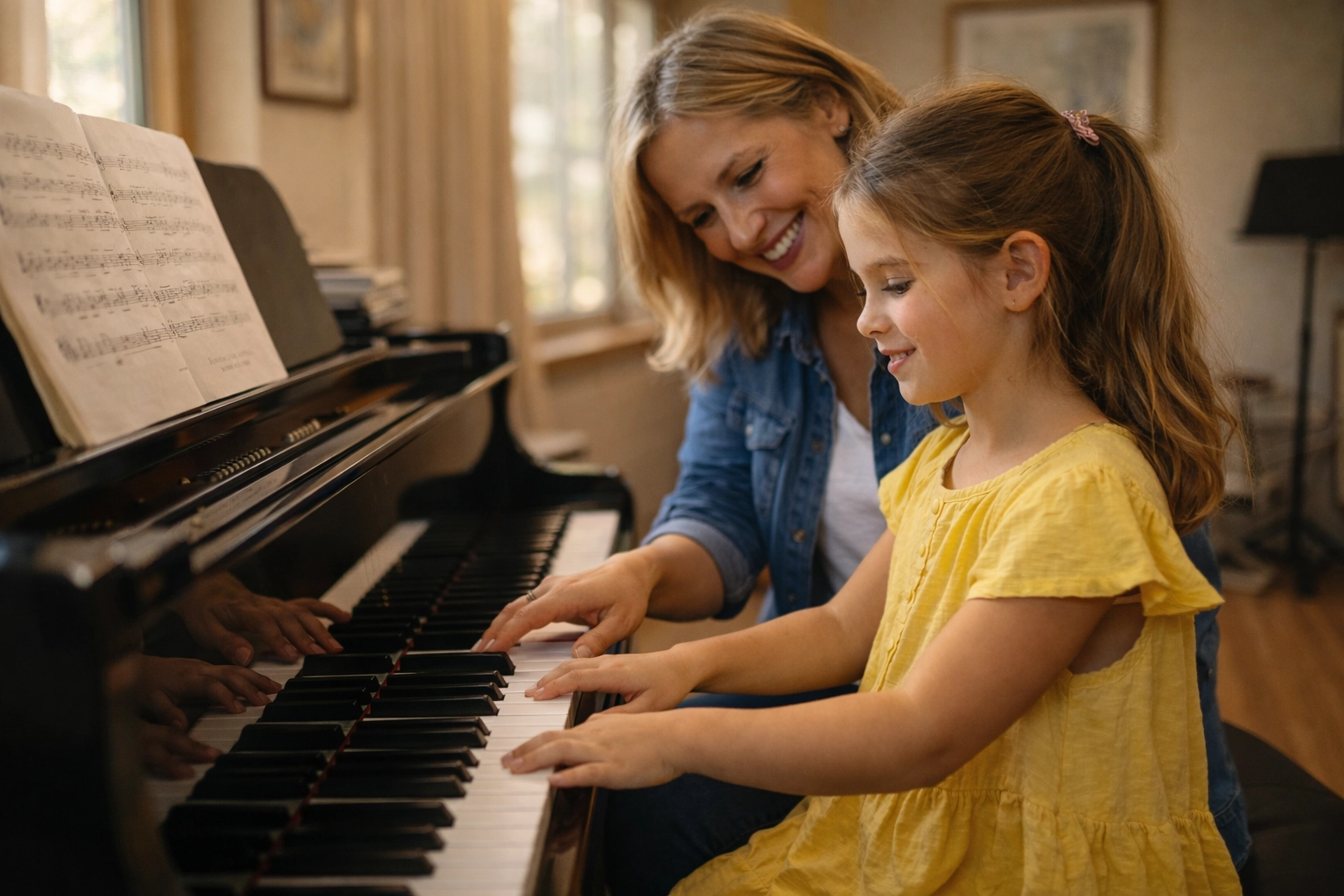
In-person piano lessons for kids are one of the clearest ways to shift your child from passive scrolling to active learning. At KeyNotes Piano Studio, we watch it happen week after week: posture improves, focus sharpens, confidence shows up, and the home routine gets a little more grounded. If you’re looking for piano lessons Tallahassee families can count on, the answer is not another app. It’s a real teacher, a real instrument, and real accountability.
The App Problem: Feedback Isn’t the Same as Teaching
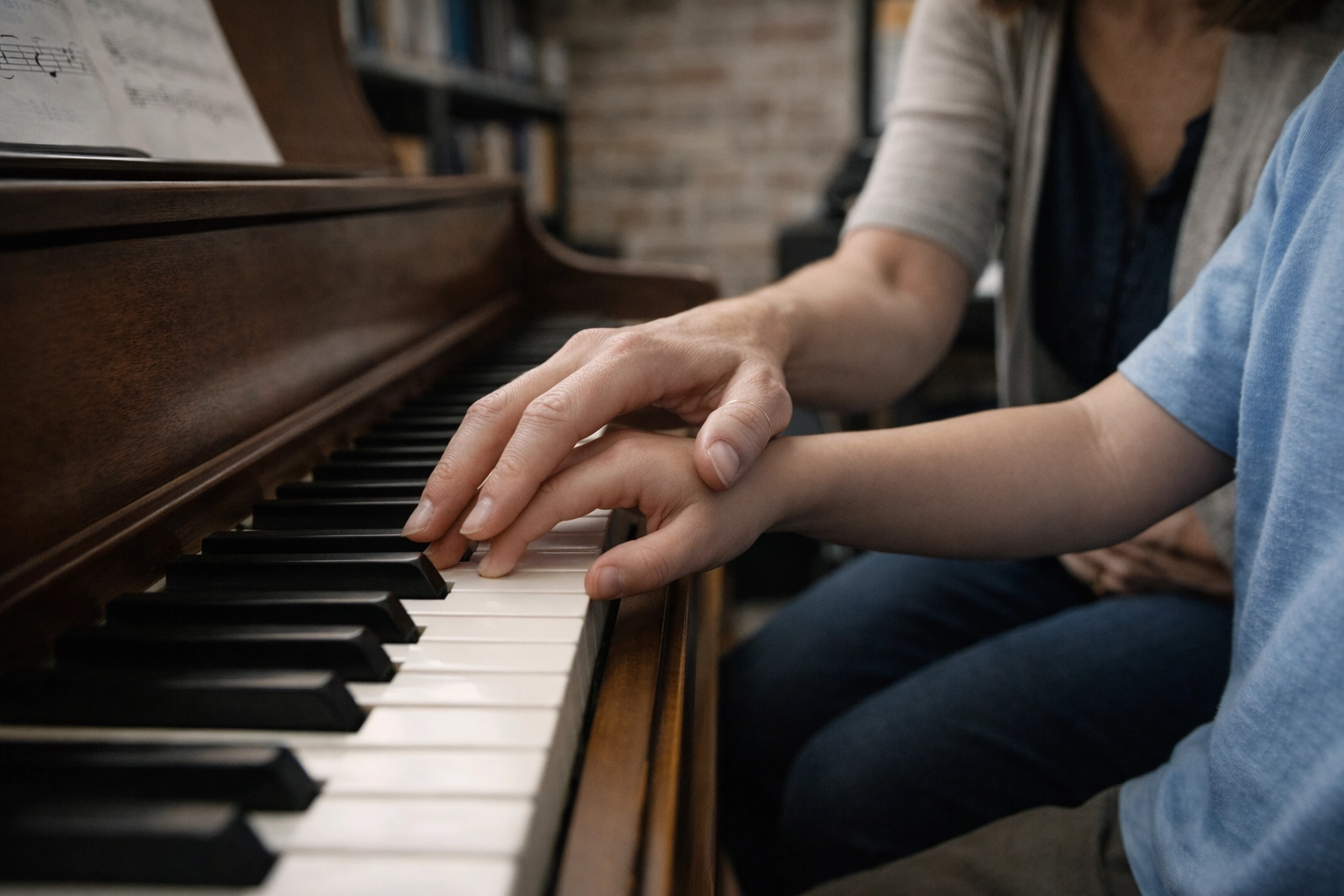
Educational apps can be fun, and I’m not here to pretend technology is the villain. But an app can only react to what it detects. It can say “wrong note,” but it cannot diagnose the reason: a collapsed knuckle, a stiff wrist, or a child rushing because they’re anxious.
That missing piece is the intrinsic value of live instruction. A good teacher notices the details that matter, adjusts in real time, and builds a relationship where a child feels safe to try, fail, and try again. When parents choose piano lessons Tallahassee students actually stick with, they’re choosing the human element: personalized guidance, encouragement, and clear expectations.
Brain Training You Can Hear: Neuroplasticity in Action
Early music study is not just “enrichment.” It’s structured brain training. When a child plays piano, they’re coordinating both hands, reading symbols, predicting patterns, and controlling timing—all at once. That is a serious cognitive workload.
Research in journals such as Frontiers in Psychology has repeatedly connected music instruction with measurable changes in attention, memory, and neuroplasticity—the brain’s ability to form new neural connections. Piano also engages areas linked to the cerebral cortex, supporting skills that transfer to language development and spatial reasoning.
At KeyNotes Piano Studio, our teaching philosophy is built around this reality: every scale is not just sound. It’s a mental rep. And reps compound.
“Music Is Math” Is Not a Cute Saying—It’s a Strategy
Rhythm is fractions. Meter is patterns. Tempo is measurement. Piano turns math concepts into something a child can feel and hear.
A student who struggles with fractions on paper often understands subdivision instantly when they experience it in rhythm: whole notes dividing into halves, quarters, eighths, and sixteenths. That practical, sensory learning reinforces the same logic pathways used in STEM subjects.
This is one of the biggest reasons families start piano lessons for kids early: it’s an advantage that shows up outside music, too.
Character Building: Discipline, Patience, and Earned Confidence
Screens reward speed. Piano rewards sustained effort.
A child can’t “skip the level” on a difficult passage. They slow down, repeat it, and build control. That process is where discipline is formed. And the moment they finally play it correctly—after a week (or three) of practice—something real happens: confidence that is earned, not handed out.
If you want a deeper look at why this matters long-term, our benefits of piano study page breaks it down.
Why Local Lessons Matter: Tallahassee Kids Thrive in Community
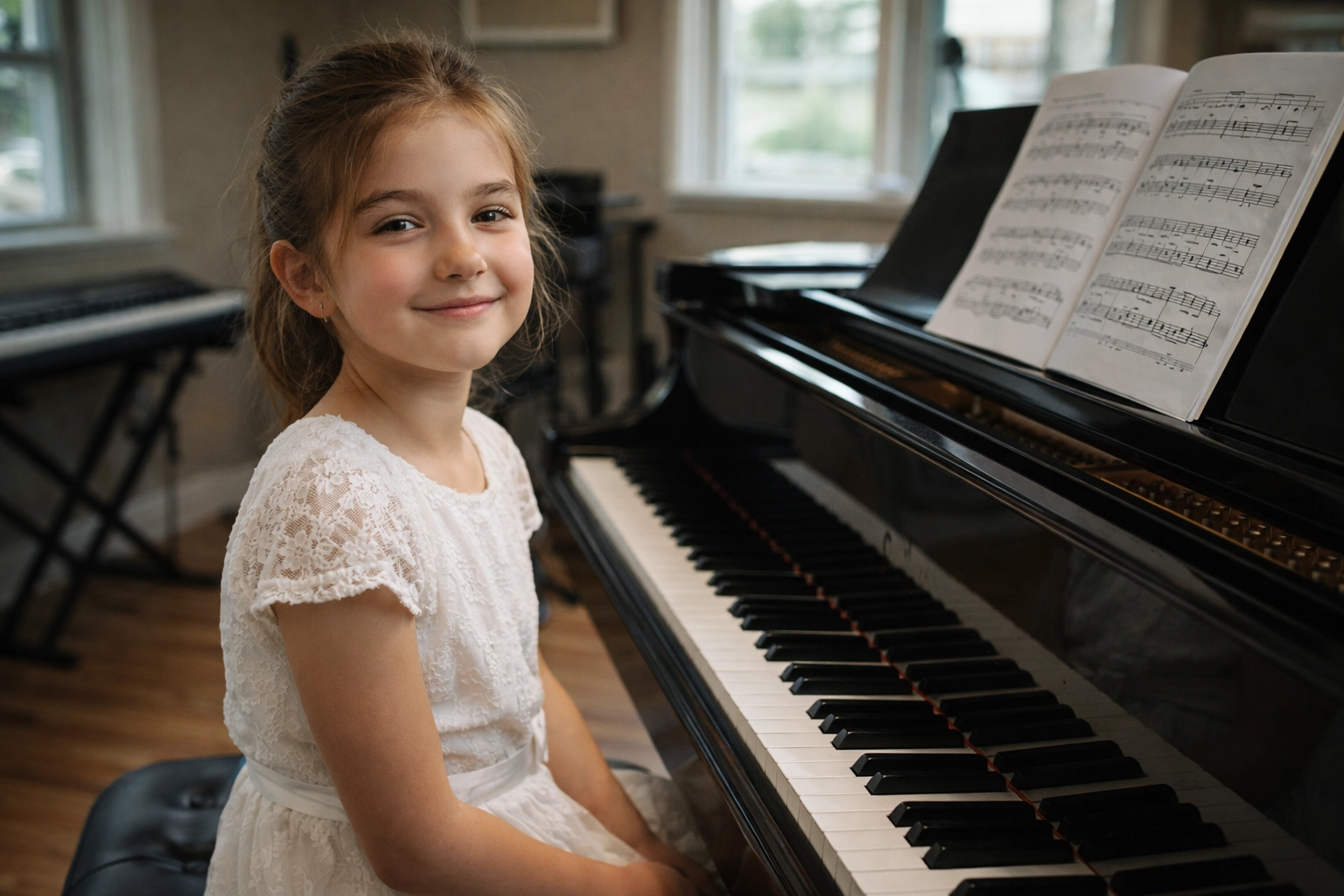
There’s a special advantage to keeping lessons local. In-person piano lessons Tallahassee families choose come with something online programs can’t replicate: community and live interaction.
When kids walk into a studio, they hear other students learning. They see that mistakes are normal. They watch older students play and think, “I can do that.” That environment builds motivation, emotional regulation, and social comfort in a way that a screen simply cannot.
And when it’s time for performance opportunities, students learn to prepare, manage nerves, and share their progress with pride.
Fine Motor Skills That Carry Into Everything Else
Piano develops fine motor control with a level of precision that tapping a screen can’t touch. Each finger becomes more independent. Hands learn coordinated tasks at different rhythms. Students gain improved hand-eye coordination and a deeper awareness of posture and movement.
These skills transfer into handwriting, athletics, and other instruments. It’s foundational training for the body and the brain.
“We’re Too Busy” — Let’s Be Honest About the Time
Parents tell me all the time, “We’d love lessons, but we’re already packed.” I get it. Tallahassee families are juggling school, sports, and work.
But here’s the practical question: where is the time currently going? If your child has even 30 minutes a day of scrolling or gaming, you already have the time. You just need a better trade.
We help families make that transition with resources like the home advantage, plus practical guidance on buying a piano so your setup supports consistent practice.
A Note from Jaime Garcia Bolao
As the owner of KeyNotes Piano Studio, I care about more than correct notes. I care about the whole person sitting on the bench.
My goal is to give Tallahassee kids a place to build focus, character, and a real relationship with music—without the pressure to be perfect. Whether your child grows up to be an artist, an engineer, or a doctor, the skills they gain through piano lessons for kids shape how they think, how they persist, and how they handle challenge.
If you’re ready to explore piano lessons Tallahassee families recommend for a reason, I’d love for you to meet the team and see what we’re about.
Conclusion: Bench Time Beats Screen Time
Screens are not going away. But a child’s attention, habits, and confidence are being shaped right now.
In-person piano lessons for kids offer something rare: focused work, real mentorship, and meaningful progress your child can feel proud of. If you want a better routine, stronger cognitive development, and a healthier relationship with challenge, start at the keys.
For more details about lessons, scheduling, and what to expect, check out our FAQ or reach out through our website. We’d love to meet your family.
