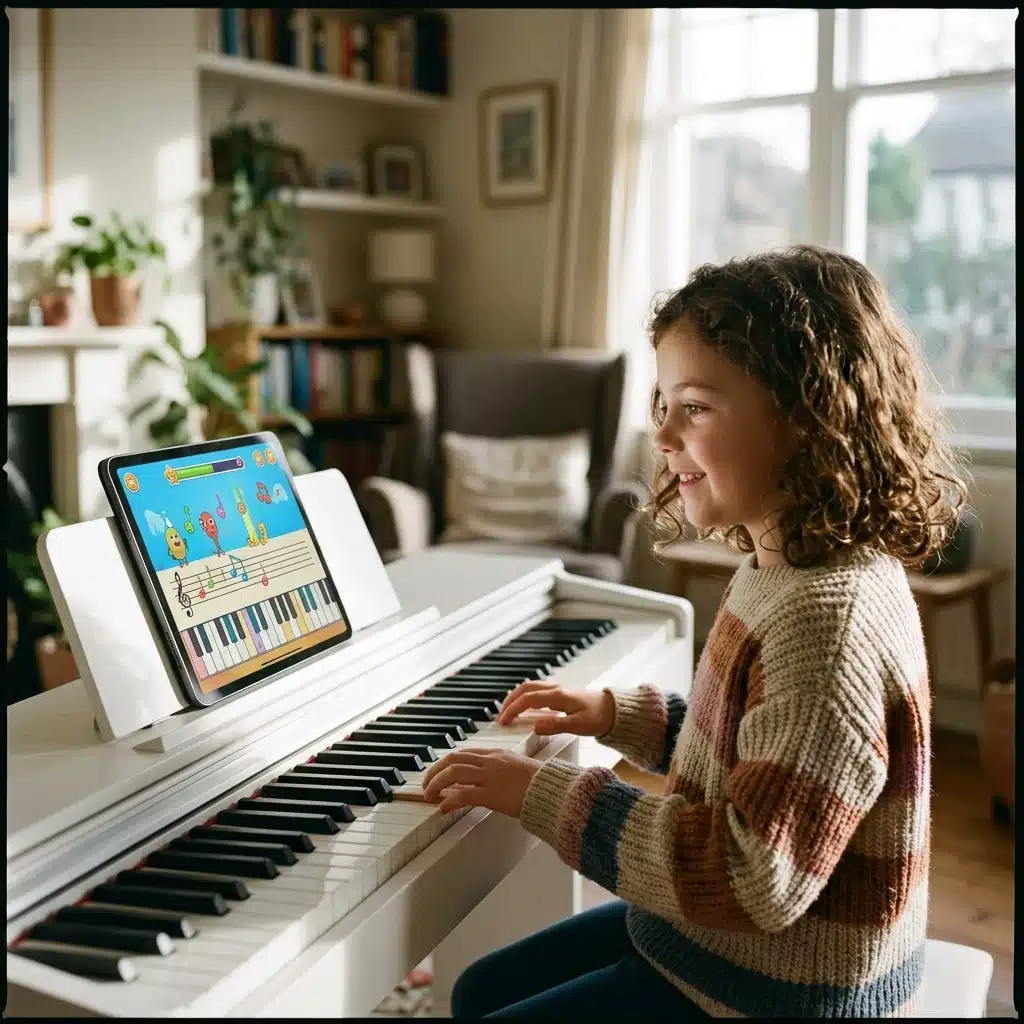
Have you ever found yourself in a daily negotiation with your child, trying to convince them that fifteen minutes of piano practice is just as important: if not more so: than finishing that next level in a video game? If you have, you are certainly not alone. As a music educator, I often hear from parents who are caught between the desire to foster a lifelong love of music and the modern reality of digital distractions.
The rise of gamified piano apps like Simply Piano, Yousician, and Playground Sessions has fundamentally shifted the landscape of music education. On the surface, they seem like the perfect solution: they turn practice into play, utilize the screens our children already love, and offer instant feedback. But as we look deeper into the development of a young musician, we must ask: Does gamified practice actually lead to musical mastery, or is it merely a digital shortcut that misses the heart of the instrument?
At KeyNotes Piano Studio, we believe in leveraging technology as a tool, but we never let it replace the essential human element of piano lessons for kids. Let’s explore the psychological mechanics of these apps, their undeniable benefits, and the critical areas where they fall short.
The Science of Engagement: Why Kids Love Gamified Apps
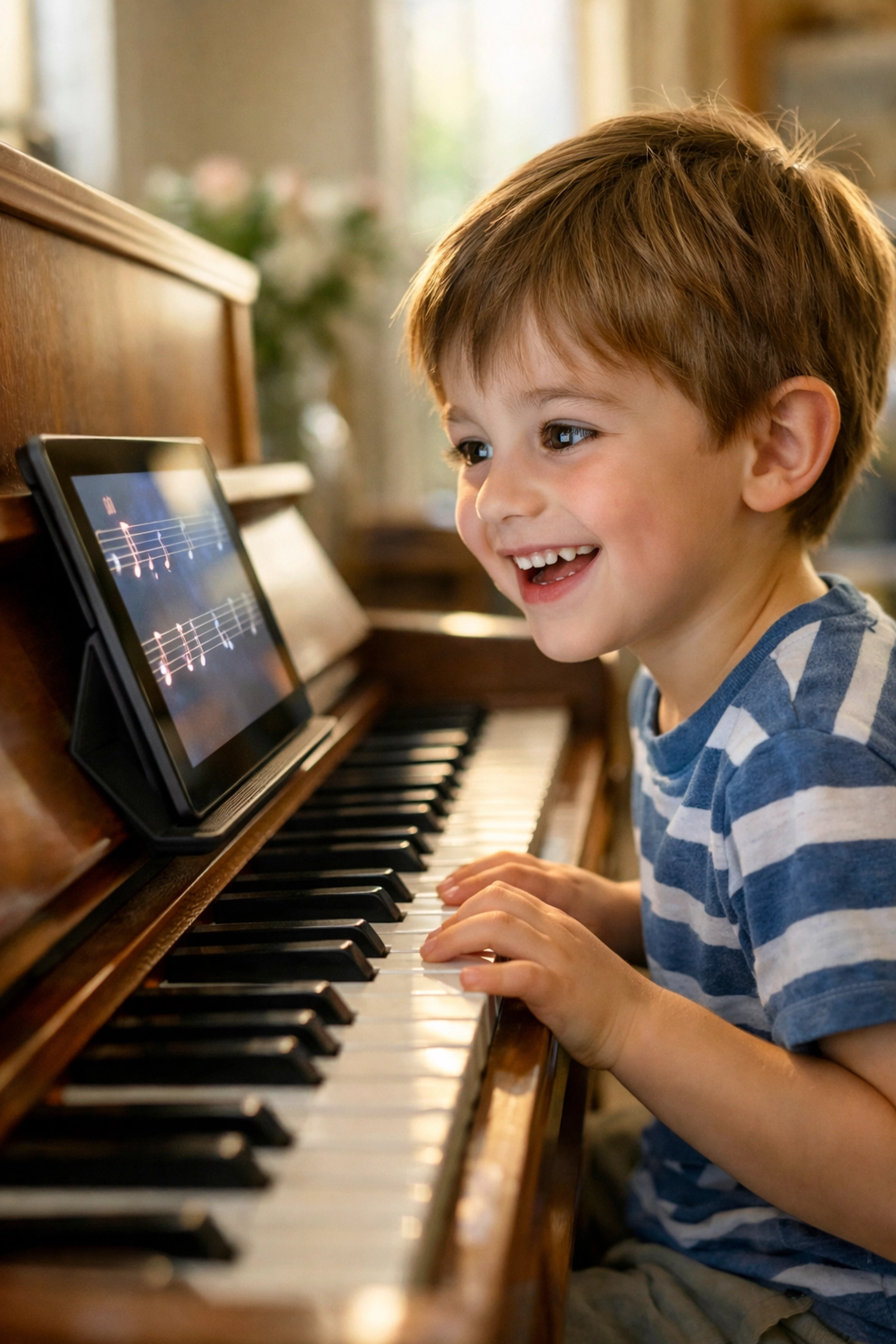
The primary reason gamified apps are so effective at getting children to sit down at the keys is rooted in basic neurobiology. These platforms are designed to trigger the release of dopamine in the cerebral cortex through a consistent loop of "challenge and reward." When a child hits a correct note and see a green light or earns a "three-star" rating on a song, their brain registers a win.
This immediate gratification is a powerful motivator for visual learners and younger children who may struggle with the delayed rewards of traditional practice. In a world where academic subjects like Math and History are increasingly digitized to maintain student interest, music education is following suit. The intrinsic value of music: the joy of the sound itself: is eventually the goal, but gamification provides the "on-ramp" for kids who need an extra push to build the habit of daily effort.
The Strengths: What Gamified Apps Get Right
There is no denying that these apps have lowered the barrier to entry for many families. Here are the primary benefits they offer:
- Low-Pressure Environments: For a shy child, the "judgment" of an app is less intimidating than a person. They can fail a song ten times in a row without feeling embarrassed, which can help build initial confidence.
- Note Recognition and Rhythmic Accuracy: Apps are excellent at teaching the "what" and "when." They can effectively drill a student on recognizing a Middle C or playing a quarter note on the beat.
- Broad Repertoire: Most apps offer a massive library of pop songs and movie themes. When a child can play a simplified version of a song they hear on the radio, their engagement levels skyrocket.
- Consistency Through Streaks: By using "daily streaks" and badges, apps encourage sustained effort. Much like a fitness tracker, these features help children visualize their progress over time.
While these are significant advantages, we must view them as the foundation, not the finished structure. Learning to play the piano is a complex cognitive task that involves much more than just hitting the right key at the right time.
The "Silent" Drawbacks: What the Algorithm Can’t See
While an iPad can tell if you pressed a key, it cannot tell how you pressed it. This is where the limitations of gamified apps become apparent: and potentially detrimental: to a child's long-term development.
The Lack of Physical Technique
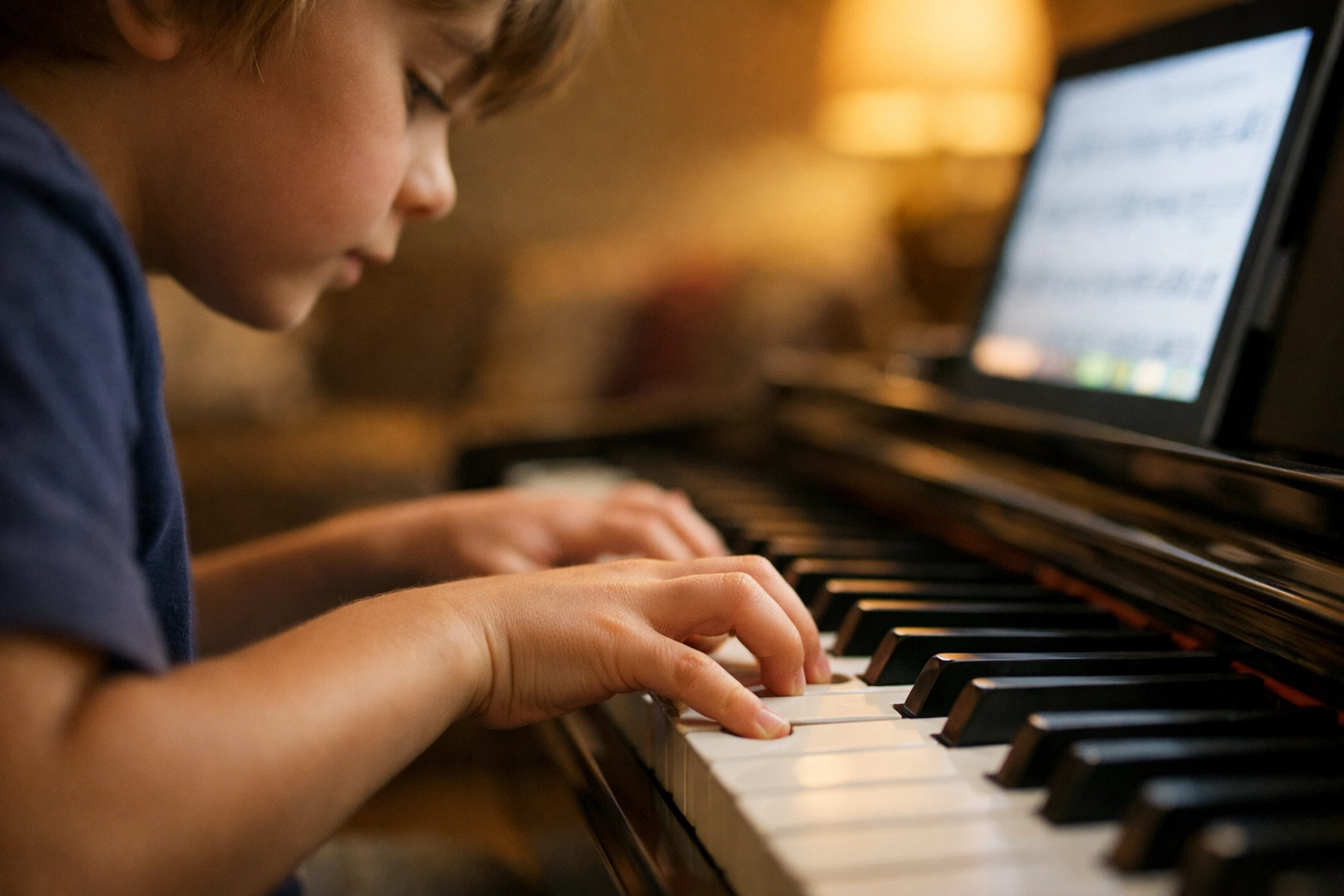
Proper posture, hand shape, and arm weight are fundamental to preventing injury and achieving a beautiful tone. An app cannot see if a child’s shoulders are hunched, if their wrists are collapsed, or if they are using excessive tension in their fingers. Without a teacher to provide real-time physical corrections, students often develop "bad habits" that take months or even years to undo later.
Missing Musicality and Dynamics
Music is more than a series of correct frequencies. It is about expression, dynamics (playing loudly or softly), and phrasing. Most apps focus on pitch and rhythm, often rewarding a student for a "correct" performance that sounds robotic and lifeless. At KeyNotes Piano Studio, we emphasize that the benefits of piano study include the development of emotional intelligence: learning how to make a piano "sing" is something an algorithm simply cannot teach.
The "Gaming" the System Problem
Children are incredibly clever. Often, they learn how to "beat the game" rather than learn the music. They might focus solely on the visual cues on the screen (the falling blocks or scrolling lines) rather than actually reading the musical notation. This creates a dependency; once the screen is turned off, the child often finds they cannot play the piece or read a standard sheet of music.
The KeyNotes Approach: Why Professional Instruction is Essential
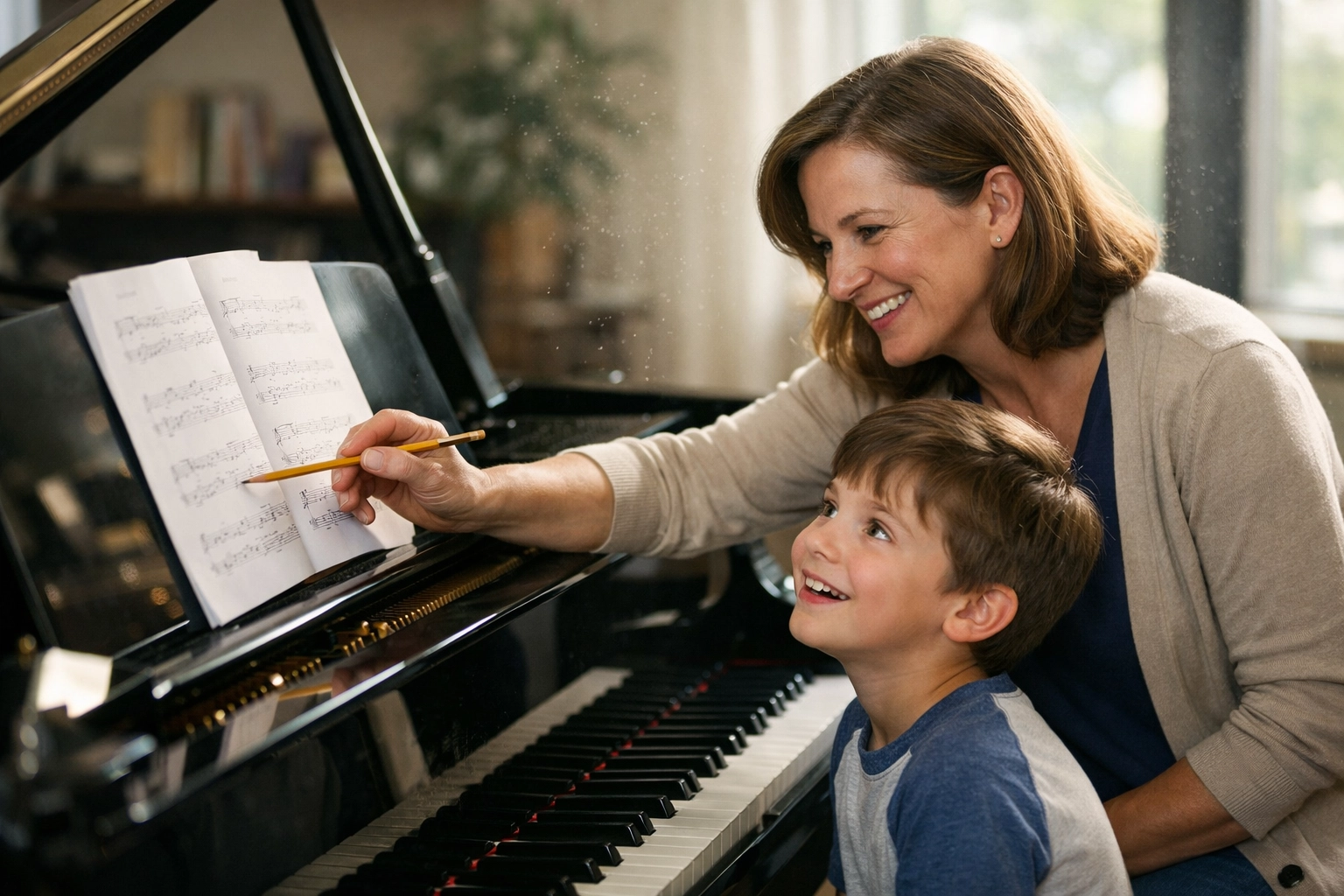
The difference between a "player" and a "musician" lies in the mentorship. At our studio, we don't just teach children how to press keys; we guide them through a holistic curriculum that builds discipline, confidence, and critical thinking.
When you choose professional piano lessons for kids, you are investing in a personalized roadmap. A teacher can sense when a student is frustrated and pivot the lesson accordingly. A teacher can notice that a child has a particular interest in composition and help them write their first melody. This level of adaptation is beyond the reach of even the most sophisticated AI.
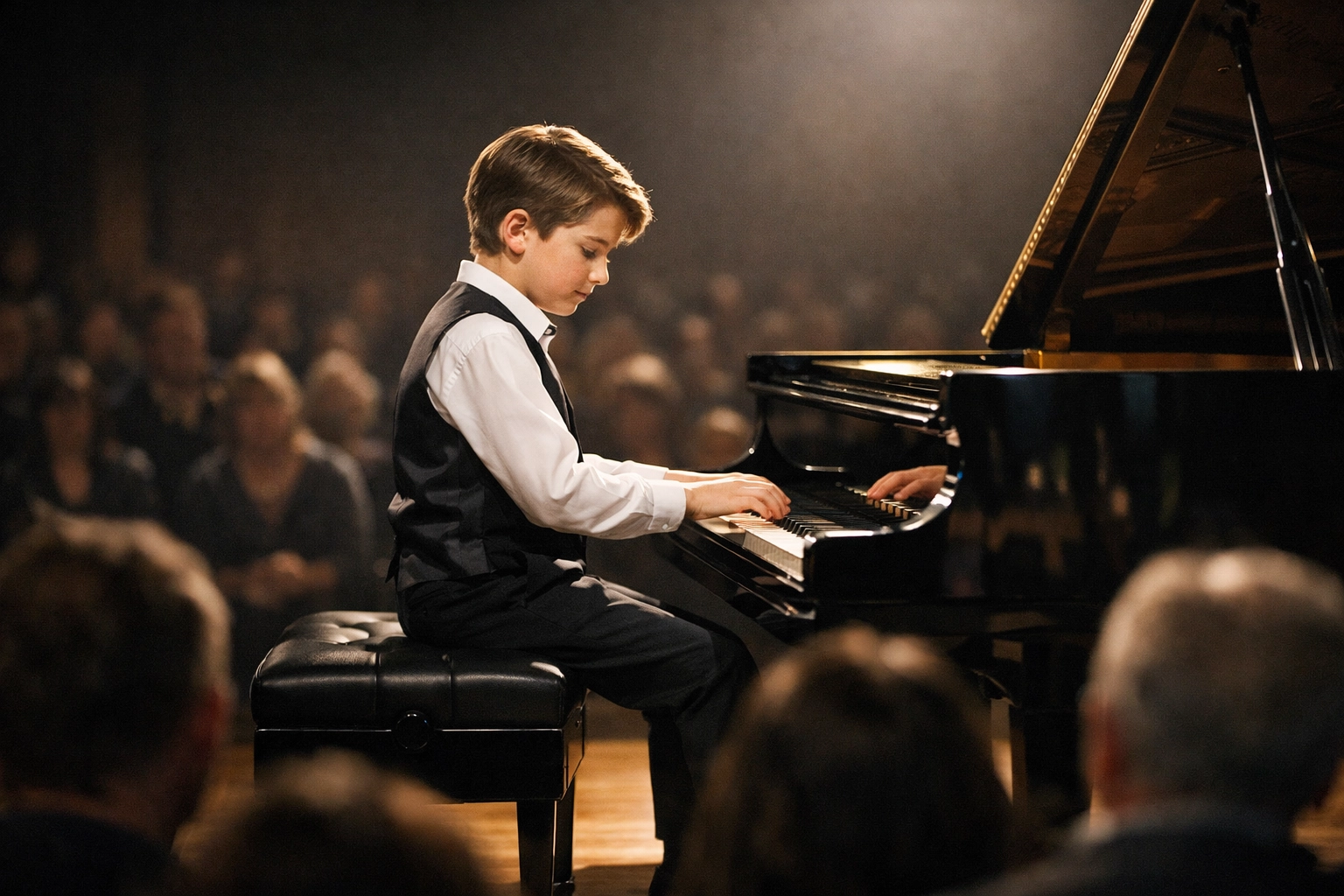
Furthermore, we provide performance opportunities. Playing for a digital leaderboard is one thing; performing for a supportive audience of peers and family is a transformative experience that builds real-world resilience. You can learn more about our philosophy on our Home Advantage page.
Finding the Balance: A Hybrid Model for Success
Does this mean you should delete the apps? Not necessarily. At KeyNotes Piano Studio, we often suggest a hybrid approach for our Tallahassee families.
- The Teacher as the Architect: The weekly lesson with a professional instructor sets the goals, corrects the technique, and introduces the soul of the music.
- The App as the "Tutor": During the week, gamified tools can be used to supplement practice, making note-reading drills more fun or providing a backing track for a student to play along with.
Think of it like learning a language. An app like Duolingo can help you memorize vocabulary, but you will never become fluent until you have conversations with a native speaker who can correct your accent and explain the cultural nuances.
Long-Term Vision: Growing the Whole Person
Ultimately, the goal of music education is not just to produce someone who can play a few tunes. It is to develop the whole person. The sustained effort required to master a difficult Mozart sonata or a complex jazz piece translates directly to success in other areas of life, from university-level research to professional career paths.
We view piano as a fundamental tool for cognitive development, comparable to the rigors of advanced mathematics. It requires the brain to process multiple streams of information simultaneously, fostering a level of mental agility that few other activities can match. While an app provides a fun diversion, the discipline gained through traditional study is what truly shapes a child’s character.
Conclusion: Take the Next Step in Your Child’s Musical Journey
Gamified apps are a wonderful "spark" to ignite interest, but a professional teacher is the "fuel" that keeps the fire burning. If you want your child to experience the full range of benefits that music has to offer: from improved hand-eye coordination to a deep, lifelong appreciation for the arts: it is time to move beyond the screen.
If you are looking for music in Tallahassee that combines modern engagement with time-tested instructional techniques, we would love to meet you. Let’s work together to turn that "digital high score" into a real-world talent.
Ready to start? Contact us today to schedule a consultation and see how KeyNotes Piano Studio can make a difference in your child's life.
