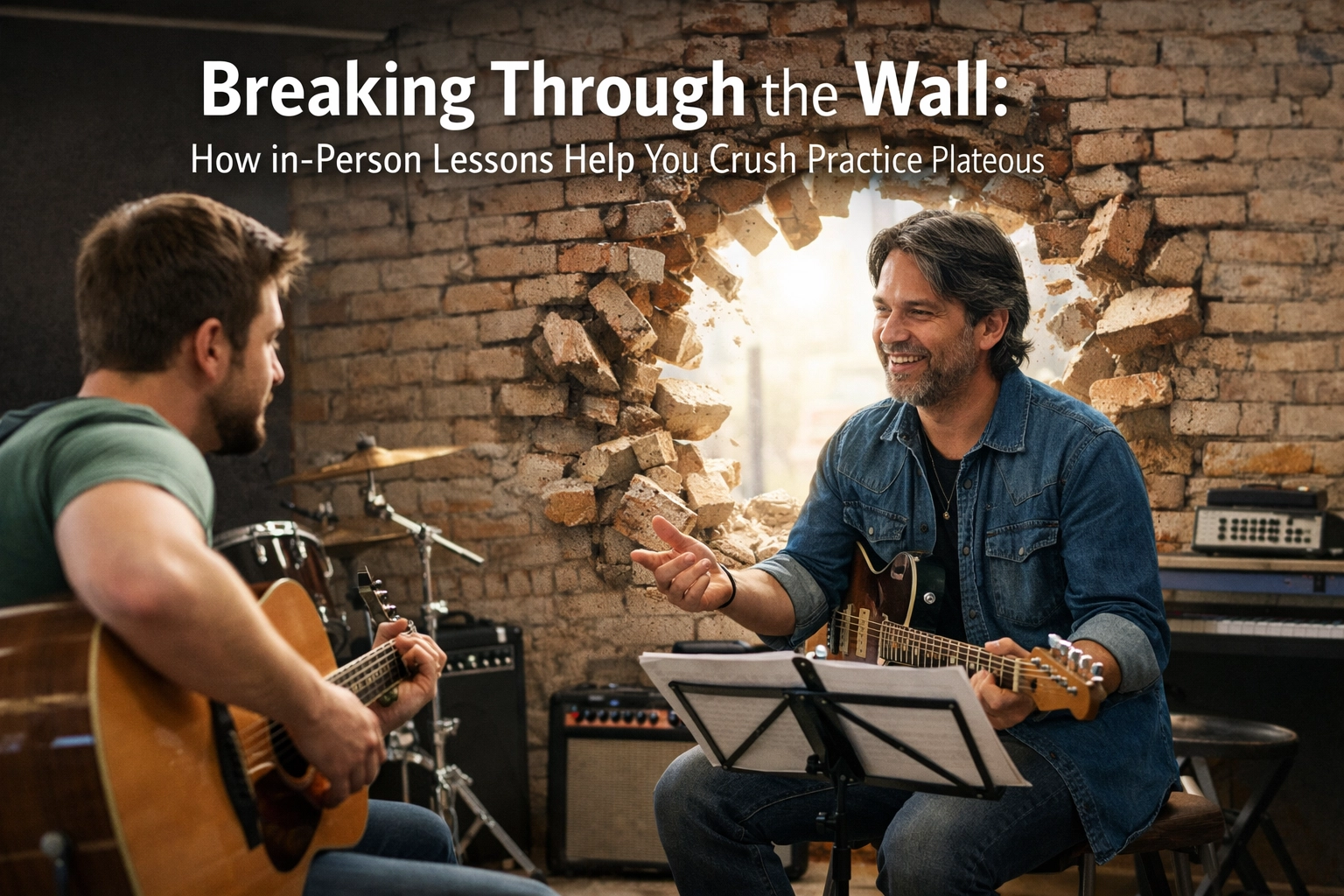
Have you ever sat down at your piano, opened your sheet music, and felt a wave of "stuck"? You’ve been practicing that same Chopin nocturne or that Jazz standard for weeks. You know the notes. You’ve listened to the recordings. But for some reason, it just doesn't sound right, and it feels like you haven’t improved in a month.
This is the "Practice Plateau," and let me tell you: it’s one of the most common hurdles for adult students and older kids alike. It’s that invisible wall where your effort no longer seems to translate into progress. In my years of providing music lessons in Tallahassee, I’ve seen this happen to the most dedicated students.
The good news? The wall isn’t permanent. In fact, hitting a plateau is often a sign that you are ready for a technical breakthrough. However, breaking through that wall on your own is incredibly difficult. This is where the value of a live, in-person instructor becomes undeniable.
The Mystery of the Practice Plateau
Why do we hit walls? Often, it’s because we’ve reached the limit of what our current technical habits can support. Think of it like a builder trying to add a third story to a house with a foundation meant for two. No matter how many bricks you buy or how hard you work, the structure won't hold until you fix the foundation.
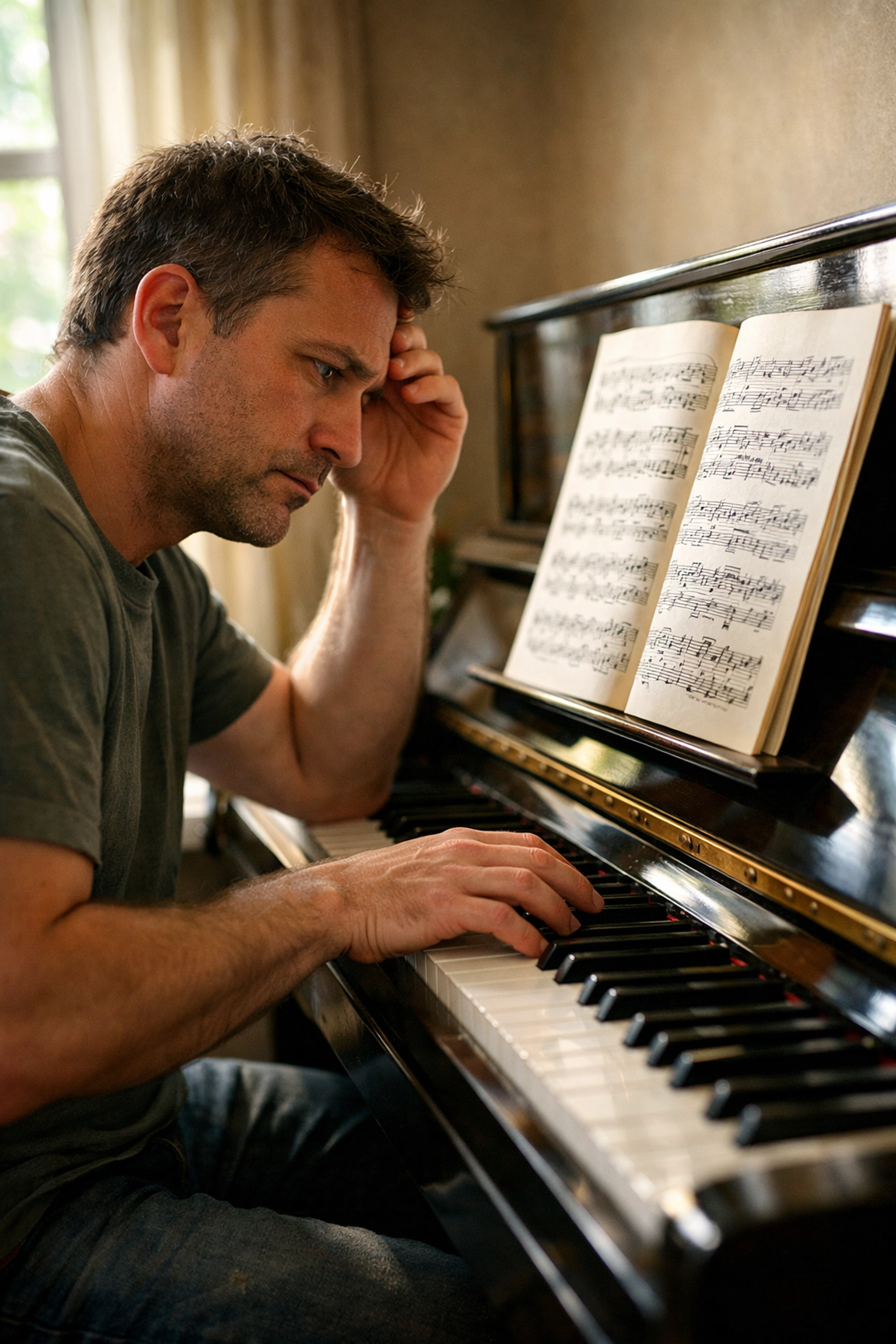
In music, that "foundation" is your technique: things like your posture, hand shape, and weight distribution. When you’re learning via YouTube or a generic app, those platforms can tell you what note to play, but they cannot see how you are playing it. You might be playing the right C#, but if you’re doing it with a collapsed knuckle or a locked wrist, you’ve just hit a ceiling. You can't play faster or more expressively because your body is literally fighting itself.
The "Third Eye": Why Live Teachers See What You Miss
As a teacher, my job is to be the "third eye" for my students. When you are focused on reading the music and hitting the right keys, your cerebral cortex is working overtime. You don't have the mental "bandwidth" left to notice that your left shoulder is creeping up toward your ear or that your thumb is tucking too late in a scale.
These tiny technical hitches are the primary cause of plateaus. During our sessions at KeyNotes Piano Studio, I’m not just listening to the music; I’m watching the mechanics of your movement.
- Spotting Micro-Tension: Tension is the "silent killer" of progress. I can see the moment a student’s forearm tightens before a difficult passage. By making a real-time adjustment: perhaps a slight rotation of the wrist: we can unlock speed that the student thought was physically impossible for them.
- Ergonomics and Efficiency: Adult students often struggle with "trying too hard." We use muscles we don't need, which leads to fatigue. In-person piano lessons in Tallahassee allow me to physically demonstrate how to use gravity and arm weight, rather than just "finger strength," to produce a rich tone.
- Tailored Fingering: Sometimes a plateau is caused by a fingering choice that simply doesn't fit your hand shape. A screen can't see your hand span. I can. We find the "path of least resistance" together.
Real-Time Feedback vs. The YouTube Trap
The rise of digital learning has been great for accessibility, but it has created a generation of "plateaued" learners. While we’ve discussed why DIY guitar lessons might be slowing you down, the same applies to the piano.
When you follow a video, you are in a vacuum. There is no one to say, "Stop, you're holding your breath," or "Wait, that phrasing sounds a bit mechanical; let’s try to breathe into the phrase." That immediate feedback and clarification is what turns a thirty-minute practice session into a breakthrough. Without it, you are simply reinforcing bad habits. If you practice a mistake for an hour, you haven't practiced: you've just gotten really good at making that mistake.
The Cognitive Advantage: Music as a Discipline
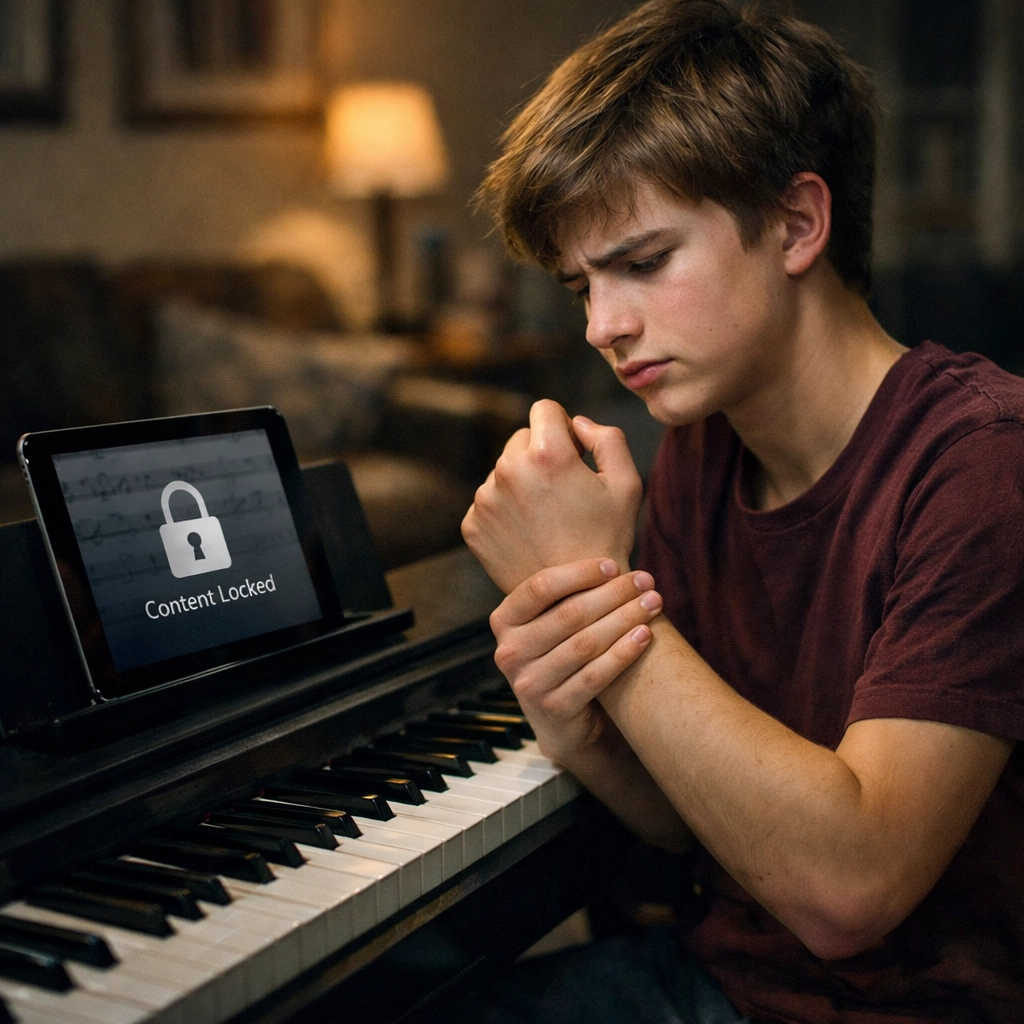
We often treat music as a "hobby," but it is much more than that. At KeyNotes, we believe that starting early matters, but we also believe that for adults and older children, music study is a fundamental tool for cognitive development.
When you work through a plateau with a teacher, you are learning sustained effort and discipline. This isn't just about the piano; it’s about learning how to solve complex problems. Much like Math or History, music requires you to synthesize abstract concepts with physical execution. The intrinsic value of music study lies in the "long-term" philosophical outlook: building a person who doesn't quit when things get difficult, but instead looks for a better strategy.
Whether you are looking for piano lessons for kids or you are an adult returning to the instrument, the goal is the same: developing the "whole person." Technical proficiency is the vehicle, but character building is the destination.
Overcoming the Psychological Wall
Plateaus aren't just physical; they are mental. It’s easy to get discouraged and think, "Maybe I’m just not musical," or "I’ve reached my peak."
A live instructor provides the motivation and accountability that an app lacks. When you come into the studio, we celebrate the small wins that you might not even notice. Did you handle that transition more smoothly? Is your tone more consistent? These "micro-progressions" are the breadcrumbs that lead you out of the plateau forest.

In our lessons for adults, we focus heavily on the psychology of practice. We talk about how to break down a difficult measure into its smallest components, turning an overwhelming wall into a series of manageable steps. This structured environment is essential for maintaining engagement when the "honeymoon phase" of learning a new piece wears off.
Why In-Person Instruction in Tallahassee Wins
Living in Tallahassee, we have a vibrant community of musicians and learners. However, the distractions are many. Having a set time each week to come to KeyNotes Piano Studio creates a "sacred space" for your art. It’s a commitment to yourself and your growth.
If you’ve been searching for piano lessons in Tallahassee, you aren't just looking for someone to show you where middle C is. You’re looking for a mentor who can navigate the technical and emotional landscape of music with you. You're looking for someone who understands our teaching philosophy and can help you reach those performance opportunities you’ve been dreaming of.

Crush the Plateau Today
Don't let a practice wall turn into a reason to quit. Most of the time, you are just one or two small technical adjustments away from your next big leap in ability. Whether it’s fixing a "flying pinky" or learning how to properly use the pedal to create a lush soundscape, these are the nuances that require a human touch.
If you’re feeling stuck, or if you’re just starting and want to ensure you build a foundation that won't crumble, I’d love to help. You can learn more about the instructor and see how we do things differently here.
Ready to break through?
Don't spend another week practicing the same mistakes. Let’s look at your technique together and find the path forward.
- Step 1: Check out our policies to see how we work.
- Step 2: Explore the benefits of piano study for all ages.
- Step 3: Contact KeyNotes Piano Studio today to schedule your first session.
The wall is only as high as you let it be. Let’s climb it together.
