
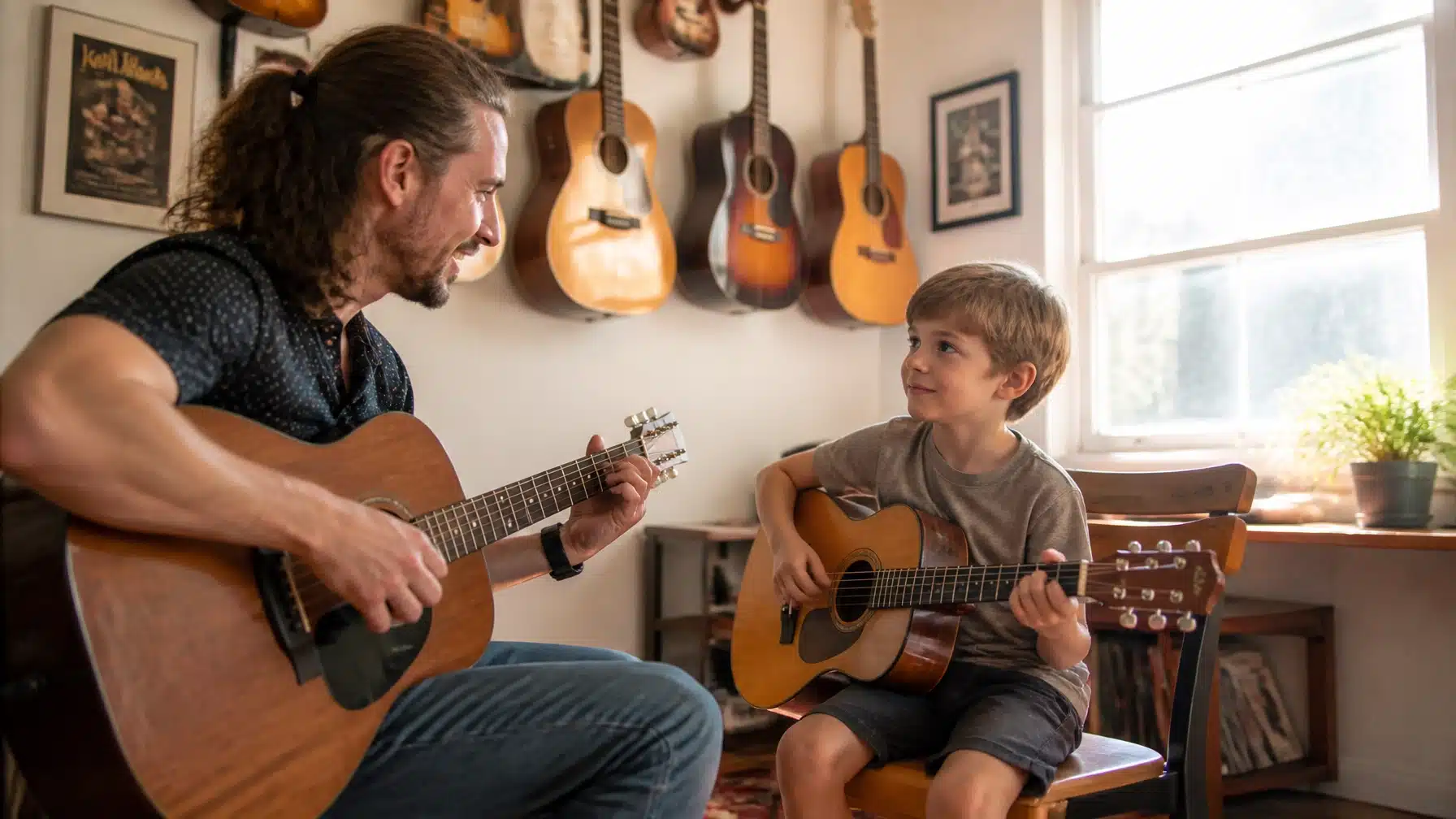
Have you ever watched your child strumming an imaginary air guitar, their eyes wide with the magic of rock and roll or classical melody, and wondered, "Is this the moment we finally sign them up for real lessons?"
As September approaches and families across Tallahassee recalibrate their weekly schedules for the academic year, this question surfaces in living rooms everywhere. Parents are bombarded with conflicting advice: some claim a child should start by age five before musical habits harden, while others suggest waiting until their teens when hand strength is fully developed. Navigating this noise can feel overwhelming, especially when you want your child’s introduction to music to be inspiring rather than frustrating.
At KeyNotes Piano Studio, we believe that determining the right starting age isn't just about looking at a calendar. It is about understanding the intersection of physical readiness, cognitive maturity, and emotional engagement. When approached correctly, starting guitar lessons is not merely picking up a fun extracurricular activity; it is a profound investment in cerebral cortex development, self-discipline, and lifelong artistic expression.
In this guide, we remove the guesswork for parents, exploring the ideal age ranges, physical readiness signs, and how to choose the right guidance right here in Tallahassee.
The Golden Window: When Are Kids Actually Ready for Guitar?
For most children, physical and cognitive readiness for formal guitar instruction aligns around ages 6 through 8, with many experienced educators finding 7 to 9 to be the optimal sweet spot.
Why this specific window? Before age six, most children lack the fine motor control, finger strength, and hand-span required to press down steel or nylon strings cleanly without experiencing fatigue or pain. The guitar is uniquely demanding compared to other instruments; unlike a piano where pressing a key produces an immediate clean note, the guitar requires simultaneous coordination: one hand pressing slender strings against sharp frets with precise pressure, and the other hand plucking or strumming rhythmically.

When children attempt to play too early: say, at age four or five: their frustration with hand cramping often overshadows the joy of music. However, once a child reaches seven or eight, their hands have grown enough to manage a smaller-scale (½ or ¾ size) guitar, and their attention span is robust enough to absorb structured instruction.
To learn more about why structured guidance matters so much early on, explore our insights on why DIY guitar lessons might be slowing you down and how professional instruction changes the trajectory.
Key Physical and Cognitive Signs Your Child Is Ready
Age is ultimately just a number. Two children of the exact same age can have vastly different physical capabilities and attention spans. Instead of relying strictly on birthday milestones, look for these practical indicators:
- Hand Span and Reach: Can your child wrap their hand around the neck of a ¾-size guitar and stretch their fingers across three consecutive frets without straining their wrist?
- Fingertip Resilience: Can they press a string firmly against the fretboard to produce a clean note without wincing in pain? A mild adjustment period is normal, but acute physical distress indicates they may need to wait another six months or try a ukulele first.
- Sustained Focus: Can your child sit attentively and follow multi-step instructions for 15 to 20 minutes? Music lessons require active listening, trial, and correction.
- Bilateral Coordination: Can their left and right hands perform different actions simultaneously: one shaping a chord while the other maintains a steady rhythm?
When these elements align, your child is primed for meaningful progress. If you are weighing whether digital tools can substitute for live instruction during this stage, take a look at our breakdown of guitar apps vs. guitar lessons in Tallahassee.
The Cognitive and Character Benefits: More Than Just Notes on a Fretboard
Some skeptics view music lessons as a pleasant diversion, akin to building with blocks or playing sports. But neuroscientists and educators recognize music as a rigorous cognitive discipline that rivals advanced mathematics or classical literature.

When a child learns the guitar, they are actively engaging in sustained effort and neuroplastic adaptation. Consider the foundational benefits:
- Enhanced Spatial Reasoning and Math Skills: Reading tablature and standard notation requires processing spatial intervals, rhythmic fractions, and geometric finger shapes. Studies consistently link instrumental training with superior problem-solving abilities in academic subjects.
- Resilience and Frustration Tolerance: The guitar does not yield instant perfection. Mastering a clean chord transition requires dozens of failed attempts followed by micro-adjustments. This teaches children that mistakes are not failures, but essential data points on the path to mastery.
- Self-Discipline and Delayed Gratification: In a world dominated by instant digital stimulation, practicing a piece of music over weeks builds the psychological muscle of patience and dedication.
As we often discuss in our community, the intrinsic value of mastering an acoustic or electric guitar extends far beyond recitals; it builds a resilient, well-rounded character.
Overcoming Parent Pain Points: What to Do If Your Child Is Younger or Reluctant
What if your child is five years old and obsessed with the idea of playing guitar, but their hands are simply too small?
Rather than turning them away from music, redirect their enthusiasm:
- Explore the Ukulele: With its smaller nylon strings and compact fretboard, the ukulele is the ultimate gateway instrument for 4-to-6-year-olds. The chord shapes learned on a ukulele directly transfer to the top four strings of a guitar later on.
- Focus on Rhythm and Singing: In-person group or private introductory sessions focusing on pitch, beat, and vocal expression build the auditory foundation necessary for future instrumental success.
- Never Force the Instrument: Coercion breeds resentment. If a child shows resistance, investigate the root cause: is the guitar too heavy? Is the teacher's style misaligned? Finding the right environment makes all the difference.
Finding the Right Guide: Why In-Person Guitar Teachers in Tallahassee Matter
In an era of pre-recorded video tutorials and automated apps, it is tempting to think a child can learn guitar sitting alone in front of an iPad. However, self-guided digital learning lacks the most vital component of artistic education: human mentorship.

An experienced instructor immediately corrects poor wrist posture before it causes carpal tunnel strain years later. They adapt their teaching style on the fly when a student feels uninspired, turning a frustrating practice session into an enjoyable breakthrough.
When searching for professional guitar teachers in Tallahassee, look for educators who combine technical mastery with infinite patience and emotional intelligence. At KeyNotes Piano Studio, our mentors create a supportive sanctuary where children and adults alike feel safe to experiment, make mistakes, and grow into confident musicians.
Conclusion: Making Your Decision Before September
As September draws near and routines reset, deciding to start guitar lessons is a decision to prioritize your child's long-term cognitive and emotional development. Whether they are seven, ten, or twelve years old, the best time to begin is whenever physical readiness and genuine curiosity meet.
Don't let hesitation or the myth of the "perfect age" hold your family back. Contact us today at KeyNotes Piano Studio to schedule a consultation, meet our instructors, and discover how live, in-person guidance can unlock your child's musical potential this fall.
